Surveying in house or outsourcing it?
Where outsourcing runs into trouble in practice, what surveying yourself actually demands, and from what frequency it becomes worth bringing in house.

The question is usually not whether a drone survey is useful. Most companies are past that. The question is who carries it out: do you hire someone, or do you do it yourself?
That is a real trade-off with an honest answer on both sides. This article is about where outsourcing runs into trouble in practice, what surveying yourself genuinely demands, and at what point it tips.
Where outsourcing runs into trouble
On paper outsourcing is simple. You call, somebody comes, you get a report. In practice the problem is not the survey, it is the diary.
An external firm has its own planning and its own clients. And here is the awkward part: you need that survey at precisely the moment everyone needs it. Around a month or quarter close, or at year end. Which is exactly when such a firm's diary is full. Your survey slides to next week, and your close slides with it.
Then there is the weather. A drone survey cannot be flown in driving rain or strong wind. With a booked appointment, cancelled does not mean tomorrow, it means a new date in a full diary: often a week later, sometimes longer. Do it yourself and you look out of the window, wait a day, and fly tomorrow.
- You need the survey when everyone needs it, and that is when there is no capacity
- Bad weather does not cost you a day, it costs you a new appointment, usually a week or more
- There is always lead time between calling and having a figure, even when the survey itself takes half an hour
- A quick check survey is not worth raising an order for, so it does not happen
That last point is less visible than the other three, but it may be the most important. If every survey is an order, you only survey what you can justify in advance. Everything you would simply like to know goes unmeasured.
The real gain is availability
The conversation about surveying yourself usually turns on cost per survey. And yes: at a normal survey frequency doing it yourself is simply cheaper, and the more often you survey the lower the cost per survey works out. Welcome, but it is not the only difference and probably not the most important one. The biggest difference is that the moment of measuring becomes a choice rather than an appointment.
If the system is on the premises, a survey stops being a project. Somebody takes it out of the cupboard, drives to the site and surveys. That changes the kind of question you ask with it. No longer only "how much is there at the end of the quarter?", but also "let me just check this before we commit to it".
Concretely, you get back three things you cannot practically organise through a third party:
- You survey at the right moment: just before or just after a movement, or on the day of your close rather than three days earlier
- You can re-survey. If a result looks odd you fly it again tomorrow instead of arguing about it
- You survey things you would never outsource, because a quick check now costs half an hour rather than an order
And the effect of that is larger than it sounds: frequency becomes an operational decision rather than a budget question. You survey when it is useful, not when it is justifiable.
How often surveying is actually worthwhileBut surveying yourself is not trivial
This needs an honest counterweight, because "do it yourself" sounds easier than it is. Buying a drone and starting to survey is a discipline, and that discipline has more parts to it than people expect.
- The right equipment: a drone reliable enough for survey work, with a suitable camera and positioning. A consumer drone gives you nice images and no survey data
- Flight planning: flight height, overlap and pattern determine the quality of your model. Set wrong, you get a model that looks complete but is locally distorted
- Processing: turning photos into a measurable 3D model takes photogrammetry software, compute, and somebody who can judge whether the result is sound
- Survey knowledge: where the reference surface sits, which coordinate and height system you work in, and how you know whether a result is plausible
- Regulation: which drone may be flown by whom, what certification is needed, and how insurance and liability sit
- Continuity: if one person picks this up it becomes a specialism. If that person leaves, the capability leaves with them
That is why standalone drones and standalone 3D software so often end up in a cupboard. Not because the technology does not work, but because there is a discipline attached that nobody budgeted for. Anyone surveying themselves with separate components is in effect buying a second job function into the business.
What technically happens between photo and 3D modelWhen outsourcing is the better choice
There are situations where you are better off not doing it yourself, and it pays to be clear about those before buying anything.
If you survey once a year, outsourcing is almost always the better call. Hiring a specialist for that one survey delivers more than bringing equipment, knowledge and upkeep in house for a single moment a year. At that frequency none of the above outweighs the convenience of making a phone call.
The same holds for one-off or unusual projects. A complex capture you will never repeat is work for somebody who does it often. And for surveys with legal standing, such as cadastral boundaries or formal setting out, a surveying firm remains the right party. That is a different trade with different liability, and that does not change.
Where it tips
Where exactly that tipping point sits differs per company. You notice it mainly in two ways: you spend more time waiting on somebody else's diary than you would like, and you leave surveys undone that you would actually want to run, because they are not worth raising an order for. Once that starts happening, the question is no longer whether you will do it yourself, but when.
The reason a tipping point exists at all is that the two models are built differently. Outsourcing costs per occasion, so the cost rises in a straight line with your frequency. Surveying yourself works on a fixed monthly fee rather than a price per job. An extra survey is therefore not a new order, only some fieldwork. At low frequency, paying per occasion wins. At higher frequency that flips, and it flips quickly: the same fixed burden spread over more surveys means each survey costs you less.
One thing to note: that is surveys per year in total, not per site. Four yards you want to see twice a year already puts you at eight.
| Surveys per year | Most sensible | Why |
|---|---|---|
| 1 | Outsource | Bringing equipment and knowledge in house does not pay for a single occasion |
| 2 to 3 | Borderline | Depends how badly waiting hurts you and how often the weather interferes |
| 4 or more | Do it yourself | You are structurally waiting on someone else's diary, and an extra survey is not a new order |
| Weekly or monthly | Do it yourself | At this frequency outsourcing is practically impossible to organise |
How we do it
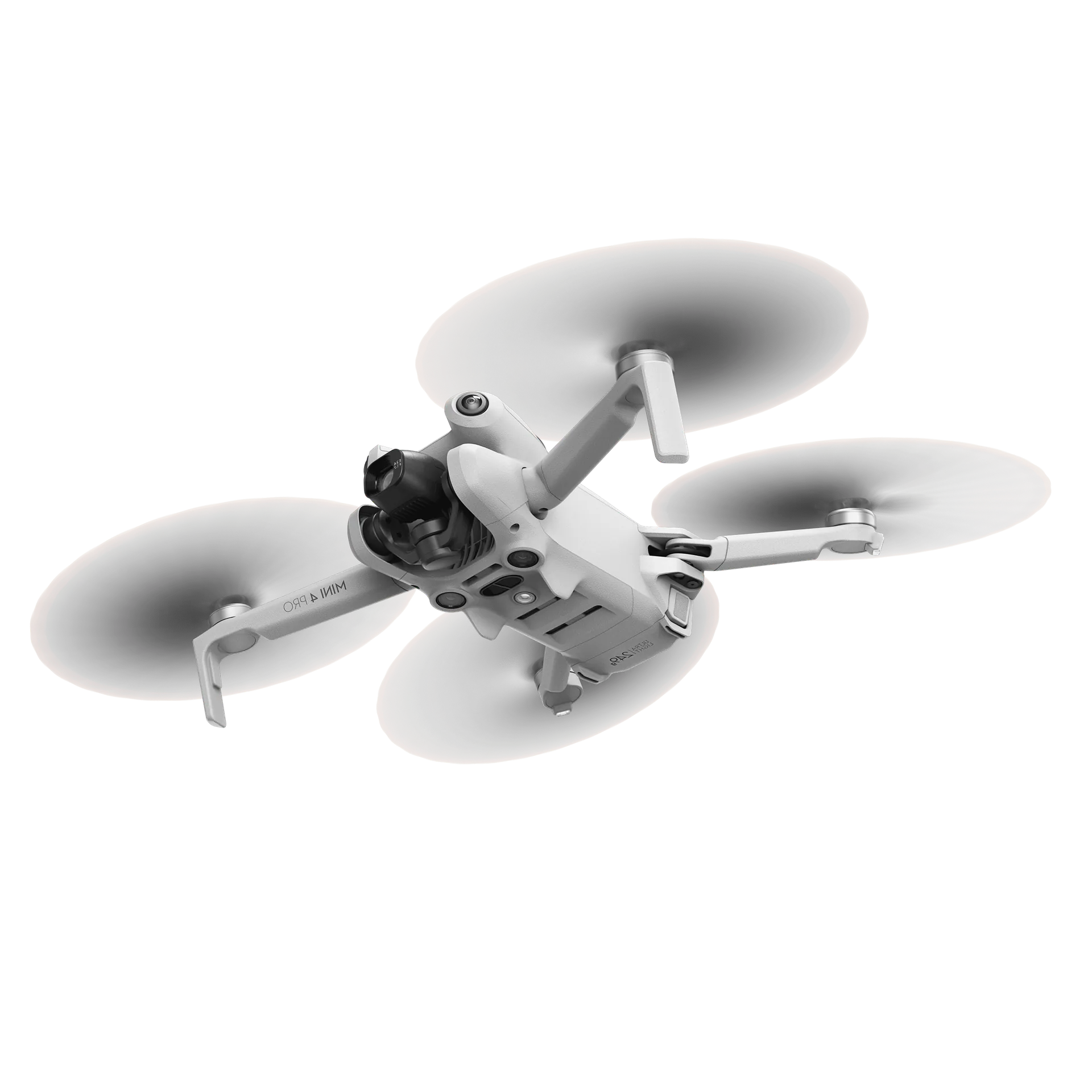
That list of complexity above is exactly why AiroMap exists in the shape it does. Not as a drone and not as software, but as one package with that discipline already built in. Point by point:
- Equipment: a survey drone matched to the job, not a consumer model
- Flight planning: you mark the area, the system works out the height, overlap and route itself
- Processing: fully automatic in the cloud, so no software on your laptop and no computation at the office
- Survey knowledge: the reference surface and the calculations sit in the platform, and the report comes out of it
- Regulation: licence and insurance are part of the package
- Continuity: half a day of training, and it is not one person's specialism. Anyone on the team can survey, plus ongoing support when you run into something
What is left is the part you wanted to do yourself anyway: somebody walks onto the site, marks the area and presses start. One fixed monthly fee instead of a price per job, with an unlimited number of users. An extra survey therefore costs half an hour of fieldwork rather than a new order.
See how the AiroMap platform works